You Didn’t Lose Margin on Creativity. You Lost It on Structure.

Eli Weisman
Chief Customer Experience Officer
David Pugh-Jones recently contributed to a CREE8 report, and he put language around the shift creative leaders feel every day but struggle to define:
Creative production is no longer the bottleneck. Decision-making and orchestration are.
This Groundhog Day theme surfaces over and over while working with creative teams building modern production models on CREE8.
Some teams are scaling from 5 people to 20 or 50-90. Some are expanding across regions. Some are weathering the ebb and flow of film and TV production. They all have talent. They all have ideas. They are all investing in creativity.
But they are all losing margin because expanding locally, especially in major creative hubs, carries costs that no longer scale. Regardless of size, this pressure starts early and it compounds quickly.
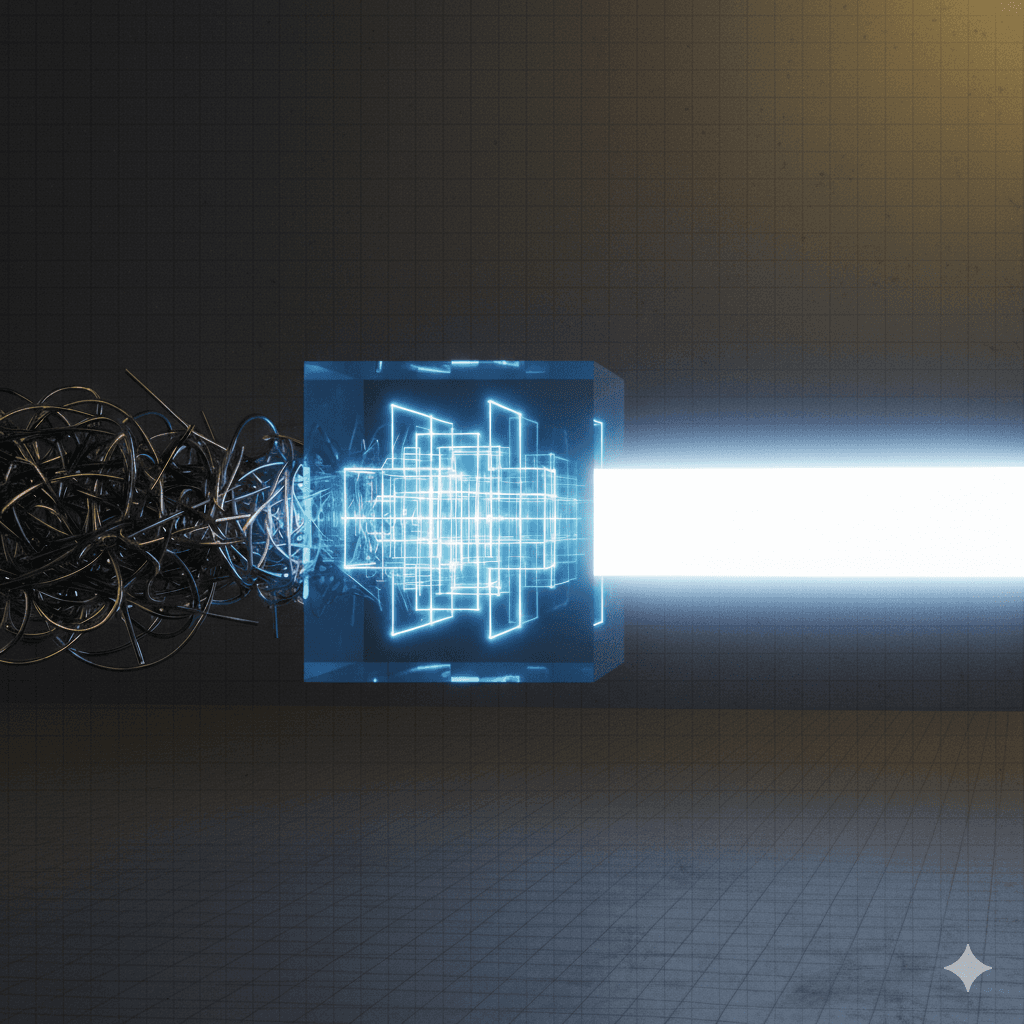
Creativity scales globally. Structure doesn’t.
Creative work is now distributed by default. Audiences and talent are everywhere. Production spans hemispheres, but operating models remain local. This hits small teams, mid-size agencies, and giant enterprises equally. Early distribution feels like growth.
At scale, it exposes structural gaps. You start seeing:
Multiple teams solving the same problems
Different tooling across projects
Duplicate workflows
Local workarounds solving shared challenges
What looks like scale at first actually leads to:
Cost drag
Slower decisions
Limited visibility
Hidden waste
Structural friction doesn’t care how big your team is. It appears the moment creative work spreads across people, locations, and tools.
Creativity is rarely the cost problem. Structure is.
Blended talent only works when systems support it
Distributed creative production is often framed as flexibility. “They’ll work while we sleep!”
The real value is economic balance. Blended models allow teams to distribute work across skill sets, time zones, and cost structures. But most teams reach a moment where adding more people stops improving output. That is usually when structure becomes the limiter.
Blended production only works when teams share:
Workflow orchestration
Infrastructure
Visibility & Governance
Without that:
Teams optimize locally
Work gets recreated
Decisions slow down
Cost goes up instead of down
Distributed work without shared systems isn’t scale. It’s distributed inefficiency.
Creative Velocity isn’t speed. It’s structure.
Creative Velocity happens when friction disappears. When production systems improve, speed, predictability, and margin also improve.
Inside the CREE8 Studio-in-a-Box model:
Work is orchestrated instead of handed off
Teams collaborate inside one environment
Capacity flexes without disruption
Costs become visible and controllable
Blended rate strategies actually hold
Velocity shows up as:
Margin stability
Faster approvals
Predictable delivery
Leadership confidence
Speed is rarely the goal. Predictability is.
The leadership blind spot
Most teams didn’t lose margin because creativity got harder. They lost margin because production scaled faster than their systems. This usually happens quietly and teams may not realize it until it is too late.
Growth hides structural weaknesses until scale exposes them.
You see it when:
Capacity grows faster than structure
Teams expand without shared systems
AI gets layered onto broken workflows
Decision authority stays local while execution spreads
Activity scales output. Coherence scales impact.
Structure is now a leadership decision
The teams that will win aren’t producing the most content. They’re designing systems that support how creativity actually scales.
Creative operations are becoming infrastructure, and when structure works, creativity compounds. When structure breaks, creativity leaks margin. This is true for small teams, growing agencies, and global organizations alike.
Studio-in-a-Box isn’t just technology. It’s an operating model. And CREE8 makes that operating model real every day.