How We Edited NAB Footage Live From 5,000 Miles Away

Simon Green
VP, Global Marketing
At NAB Show 2026, we didn't talk about faster workflows. We ran one. We captured footage in Las Vegas and edited it live in London, 5,000 miles away, delivering finished cuts in about 30 minutes. No proxies. No file transfers. No waiting. Here's exactly how it worked, and why it changes what "remote production" actually means.
What we ran at NAB
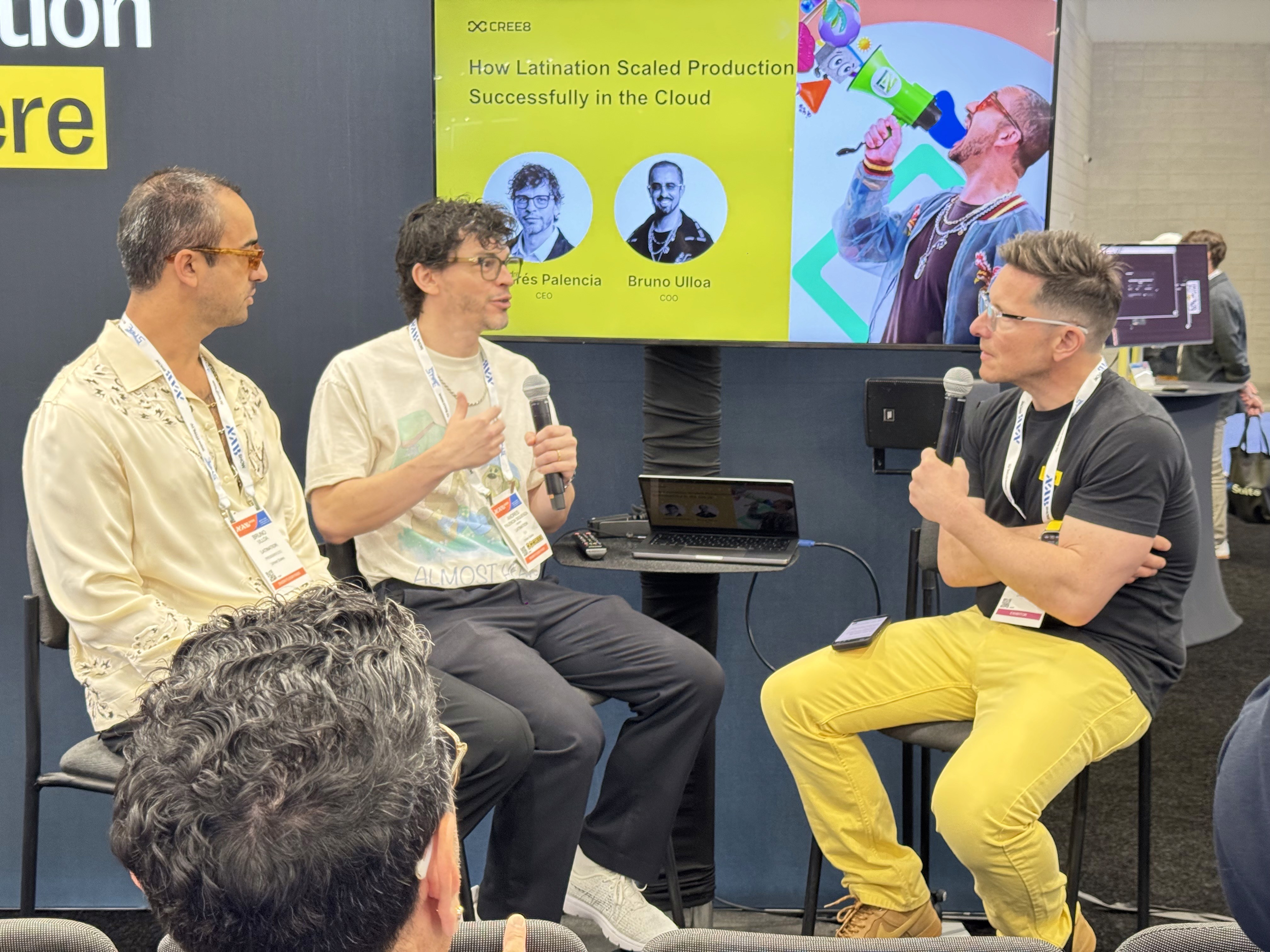
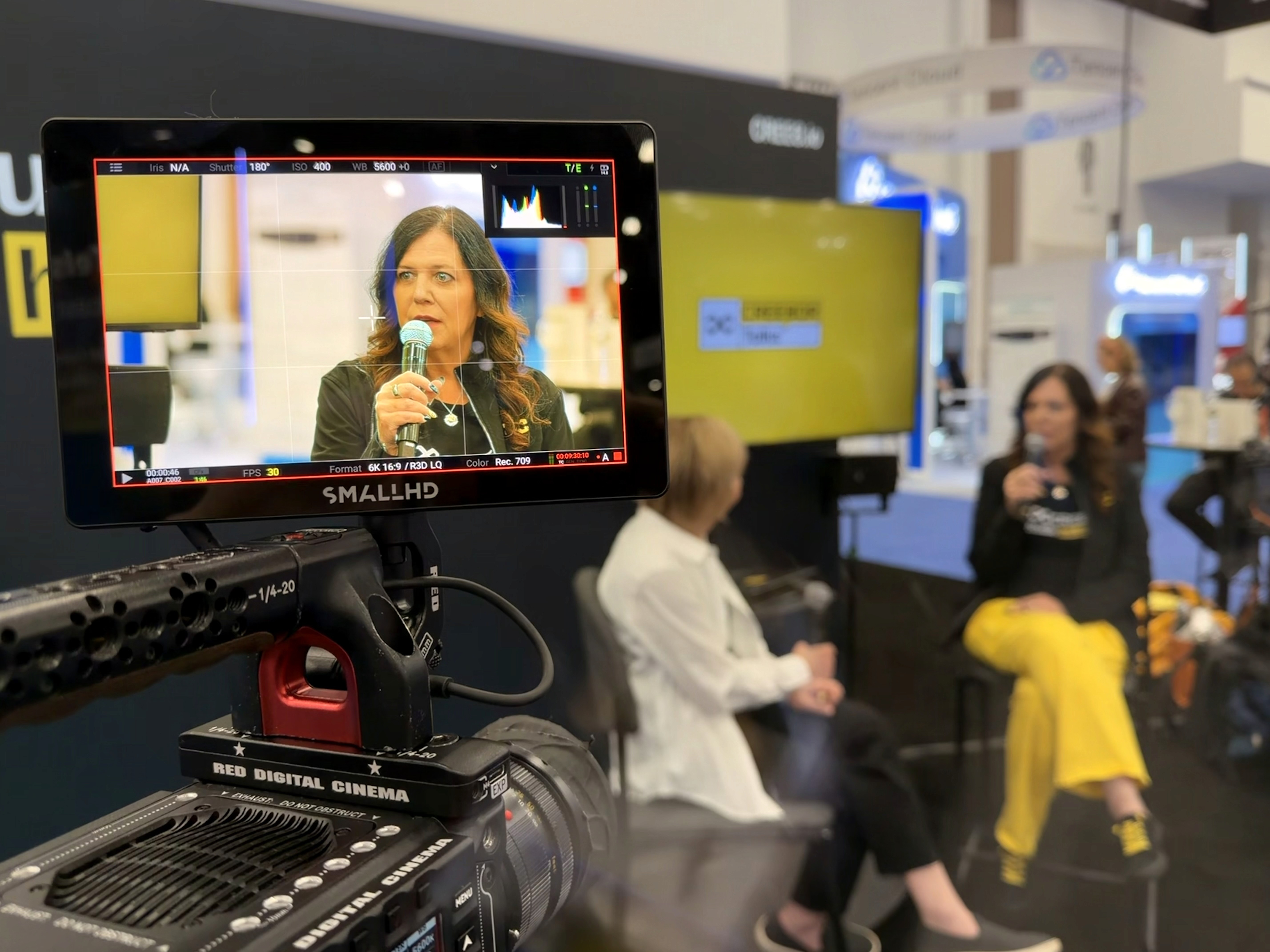
We set up on the booth in Las Vegas and filmed interviews and short pieces throughout the day, every day. At the same time, our editor, Ash [SURNAME], was working remotely in London. The goal was simple: capture, edit, and deliver content in near real time. Not a staged demo, just a real production, run live on the show floor.
What made it possible is CREE8's Unsegmented Growing File Technology (UGFT), the ability to edit a file while it's still recording. UGFT puts footage on the editor's timeline as it's captured, with no proxies and no transfers.
What it looked like from the booth
"As soon as we started recording in Las Vegas, I'd message Ash that we were going live, and he'd confirm he could already see the footage coming into CREE8 and onto his timeline as a growing file. We weren't uploading afterward or transferring it across. Ash was receiving it in seconds, as it was being captured. He was already pulling selects and building the edit while we were still filming the next piece. We were getting final edits out within about 30 minutes of something being shot. It was amazing."
Simon Green, VP, Global Marketing, CREE8
What it felt like from the edit suite in London
"From my side, it didn't feel like I was working remotely. Normally there's always a delay somewhere. You're waiting for footage to come in, for someone to tell you it's ready, or for an upload that isn't quite finished. Here, the footage was just there as a continuously growing file directly in my timeline. I'd hit 'extend edit' every 45 seconds and have more content coming through. You're opening something that's still recording, which takes a second to get used to, but once you're working with the content, it's exactly like any other file. I could start building the edit straight away, and by the time one interview wrapped, I was already part way through cutting it. You end up working continuously, not batching things up or waiting for the next step."
Ash, Editor, London
"That was the bit that stood out. Ash was 5,000 miles away, but he might as well have been in an edit suite next to me. We weren't trying to move faster or do anything different from shoots I've run before. We'd just removed the parts that slow things down. Once you do that, the speed comes naturally."
Simon Green
Why this matters
Most production workflows are still built around waiting. Waiting for files to transfer. Waiting for ingest. Waiting for DIT to finish before the next stage can start. That structure made sense when everything was physical. It doesn't anymore.
What we ran at NAB is a different way of working: capturing, editing, and delivering almost at the same time, with teams in different locations working on the same media, without copying or moving it. It's a small shift in setup, but it changes how fast a team can move. And right now, speed is exactly what teams are judged on.
Can you really edit a file while it's still recording?
Yes. CREE8's Unsegmented Growing File Technology (UGFT) writes footage to the editor's timeline as it's captured, so editing can start seconds into a shoot, with no proxies, no transfers, and no waiting for the shoot to wrap.
The old way | With CREE8 (UGFT) |
|---|---|
Shoot, then wait for transfer, ingest, and DIT before editing | Edit on the timeline seconds after capture |
Footage copied and moved between locations | Teams work on the same media, in place |
Hours from shot to first cut | About 30 minutes from shot to final cut |
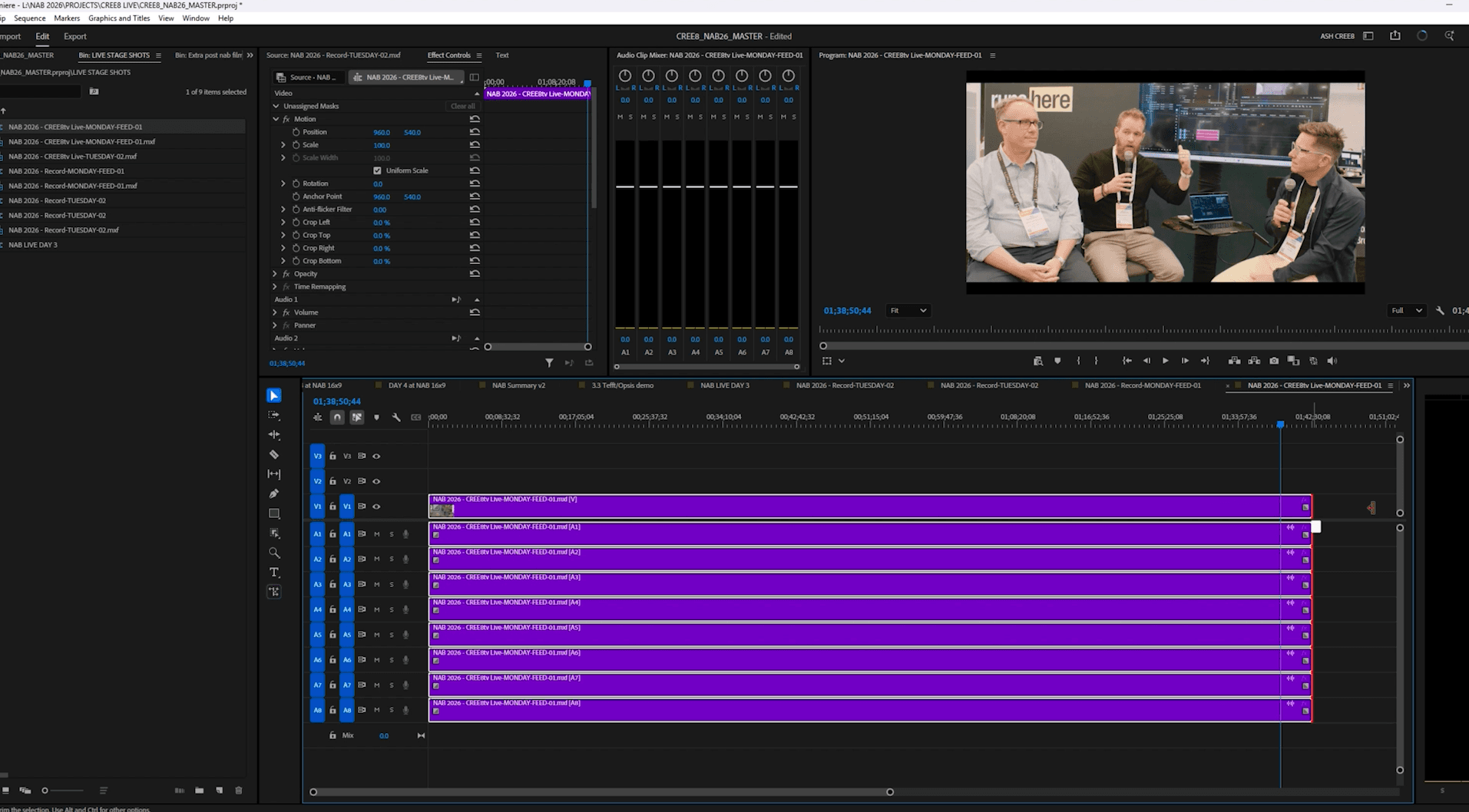
Captured in Las Vegas, edited in London, delivered in minutes. Zero proxies, zero file transfers. That's the workflow we ran live at NAB Show 2026.
Want to see what this looks like for your team? Book a demo
Watch the video
About CREE8
CREE8 is the operating layer for modern production. We give creative teams, from boutique post houses to major broadcast networks, one secure, scalable environment for the entire production lifecycle: pre-configured cloud workstations, centralized production management, unified infrastructure, and real-time visibility into cost and usage. From first frame to final delivery, without the fragmentation. cree8.io